Best GEO tools for correcting what AI says about your brand (2026), reviewed
Eight GEO tools reviewed for finding and fixing inaccurate AI claims about your brand: claim extraction, fact checking against your own pages, source tracing and the fix, with plan and price for each.
A wrong answer about your brand does more damage than a missing one. If ChatGPT quotes last year's price, says you lack an integration you shipped in spring, or confuses you with a competitor, a buyer reads it as fact and you never see it happen. Sentiment scores won't catch it either, because a wrong claim can be phrased very politely.
Correcting AI answers is a four-step job, and most tools only help with the first step:
- Find the individual claims AI makes about you, how often each one appears and in which models.
- Check each claim against a source of truth: your own pages, a knowledge base, a product fact sheet.
- Trace the wrong ones to the pages the engines cite for them, whether that is your outdated page or someone else's review.
- Fix and verify: update the page, publish the missing fact, ask the third party to correct theirs, then watch whether the claim fades as models re-read the sources.
We reviewed eight tools against those four steps, using their public homepages and pricing pages (captured November 6, 2026), the vendor documentation our catalog draws on, and our catalog entries. We did not run accounts. Where a tool doesn't document a step, the table says so. No tool can force a model to change its answer. The best ones make the fix faster and show whether it worked.
Quick verdict
Promptwatch is the only tool here that documents all four steps. Brand Narrative extracts and groups the claims on every plan, Fact Check verifies them against pages crawled from your site, citation analytics shows which sources carry them, and Content Refresh and the Content Agent handle the fix. Fact Check and its accuracy score need Business ($579 a month). AthenaHQ has claim review and discrepancy detection, but on Enterprise only. Writesonic GEO and Profound name a fact-check feature without describing how it works, and Goodie AI checks claims against facts you set. The rest measure perception rather than accuracy.
The eight tools compared
| Rank | Tool | Finds individual claims | Checks against your facts | Traces the source | Helps fix | Plan for the accuracy features |
|---|---|---|---|---|---|---|
| 1 | Promptwatch | Brand Narrative (every plan) | Fact Check against pages crawled from your site; accuracy score | Citation analytics, Page Tracker, offsite mentions | Content Refresh, Content Agent, Knowledge Base, Action Board | Brand Narrative from $95/mo; Fact Check from Business, $579/mo |
| 2 | AthenaHQ | Claim review | Knowledge Base and Oracle discrepancy detection | Citation source analysis | On-page and off-page actions, content agent | Enterprise, custom |
| 3 | Writesonic GEO | Fact Check | Method not described on the page | Citation Decay, Page Tracker | Article writer; Outreach Agent | Enterprise, custom |
| 4 | Goodie AI | Brand Command claims | Against "the pillars and facts you set" | Adverse citation share | Content, outreach and technical agents | Plan not stated; Core $295/mo |
| 5 | Scrunch AI | Not documented | Not documented | Citations and sources | AXP agent-facing pages | Core $250/mo; AXP on Enterprise |
| 6 | Profound | FactCheck named on the homepage | Method not described | Narrative and source analysis | AI Marketer agents | Enterprise, custom |
| 7 | Brandlight | Not documented | Not documented | Not described | Weekly ranked actions, strategists and engineers | No published pricing |
| 8 | Evertune | Not documented | Not documented | Not described | Content and ad agents | No published pricing |
Sources: each vendor's homepage or pricing page as captured on November 6, 2026, and our catalog. "Not documented" means we found no mention, not that the feature is confirmed absent.
1. Promptwatch: every step, from claim to corrected page
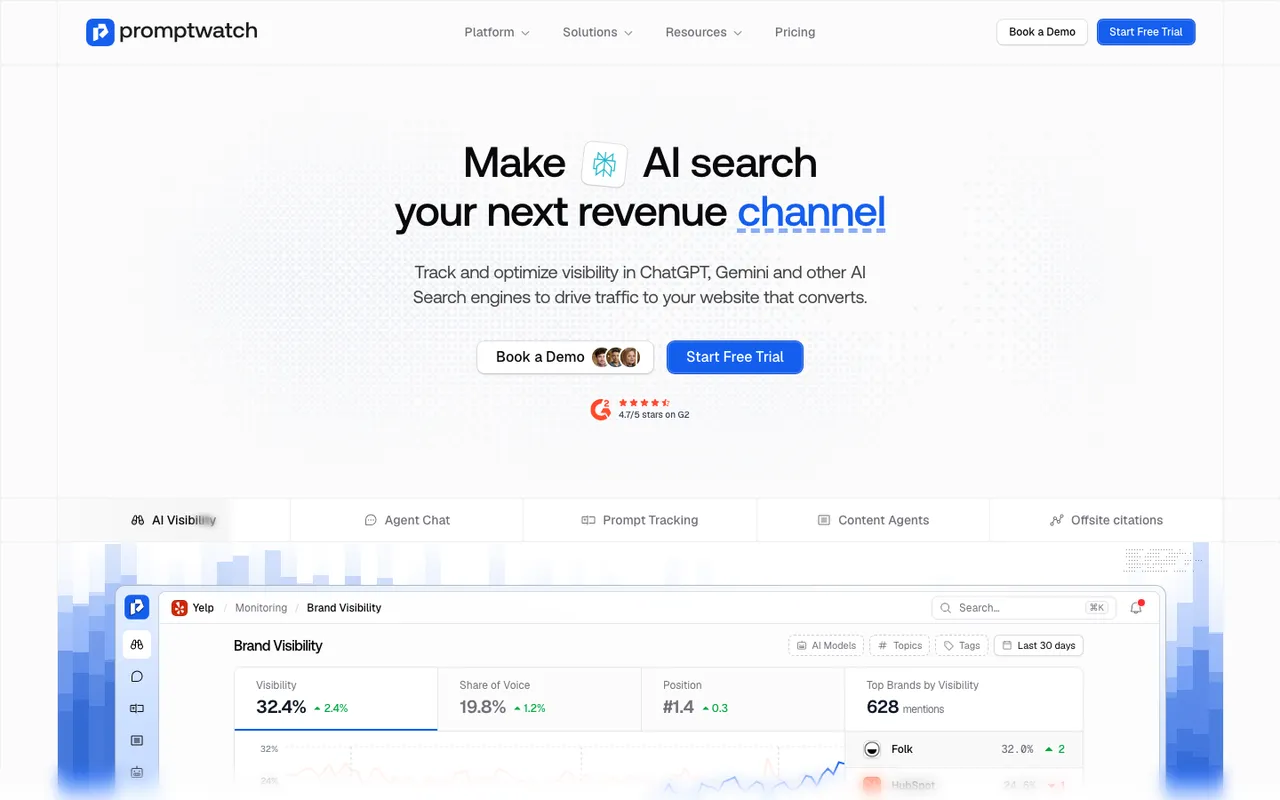 Promptwatch's homepage, captured November 6, 2026.
Find. Promptwatch's Brand Narrative, on every plan, pulls the individual claims AI makes about you and your competitors out of tracked responses. It groups the repeats, showing how often each one appears and in which models, and files them under themes such as Pricing, Features, Support and Reputation. Each claim is scored positive, neutral, negative or mixed, and each theme gets a 0 to 100 score you can compare side by side with competitors. Since November 4, the most negative claims sit at the top. Our comparison of Brand Narrative and sentiment scores explains why the claim list is more useful than a tone score.
Check. Fact Check, on Business, Agency Scale and Enterprise, verifies the claims. You mark a claim Accurate or Inaccurate, and it reads pages crawled from your site for ones that state the claim or the opposite, returning quotes and a suggested next step. It uses Agent Credits and shows an estimate before it runs. The accuracy score, added November 4, rolls that up into the share of your checked mentions that are accurate, as one number and as a heatmap per model and theme. Claims you marked count as you marked them, and inconclusive or unchecked claims are left out. Our piece on accuracy score versus sentiment and theme scores covers how to read the three together.
Trace. Citation analytics shows which pages the engines cite for your prompts, Page Tracker follows specific URLs (yours or a third party's), and offsite mentions list pages that name you without linking. The homepage demo shows the pattern: an outdated price that engines repeat, traced back to an old third-party review.
Fix and verify. Content Refresh suggests diff-style updates for your existing pages. The Knowledge Base (Professional and up) keeps the facts that content creation draws on, and on Business the Content Agent writes and publishes corrections to WordPress, Webflow or Framer. Then you can check the result. Each sitemap page has a Content tab showing how much changed between the last two audits, and an Agent Analytics tab showing crawler visits to that URL, so you can see whether AI crawlers have fetched the corrected page. The accuracy score is the number that should move afterwards, although models re-read on their own schedule.
Limits: Fact Check needs Business, so the full loop starts at $579 a month (or Agency Scale at $799). Fact Check also spends Agent Credits on top of the plan.
2. AthenaHQ: claim review and discrepancy detection, on Enterprise
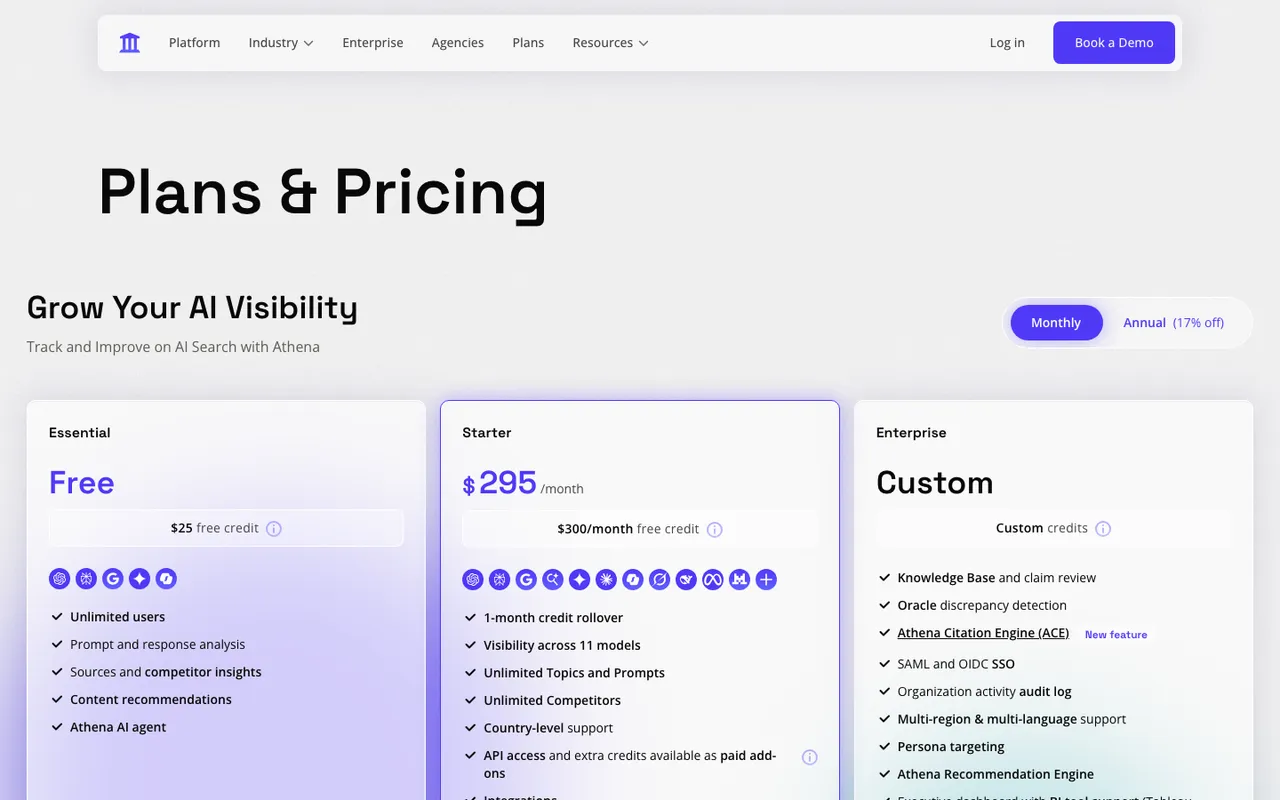 AthenaHQ's pricing page, captured November 6, 2026.
AthenaHQ is the closest to Promptwatch on paper. The Enterprise card lists "Knowledge Base and claim review" and "Oracle discrepancy detection," and the homepage FAQ names hallucination detection as part of the platform. Another homepage section promises to "find out when AI misunderstands or lacks knowledge about key parts of your business." Starter ($295 a month) has on-page and off-page actions and a content optimization agent for the fix, and the plans table lists citation intelligence for tracing sources.
The catch is that the checking features sit on Enterprise, with custom pricing, and the captured pages don't describe how claim review works or what the discrepancy detection compares against. Ask to see a wrong claim go through it on the demo.
3. Writesonic GEO: Fact Check on the enterprise tier
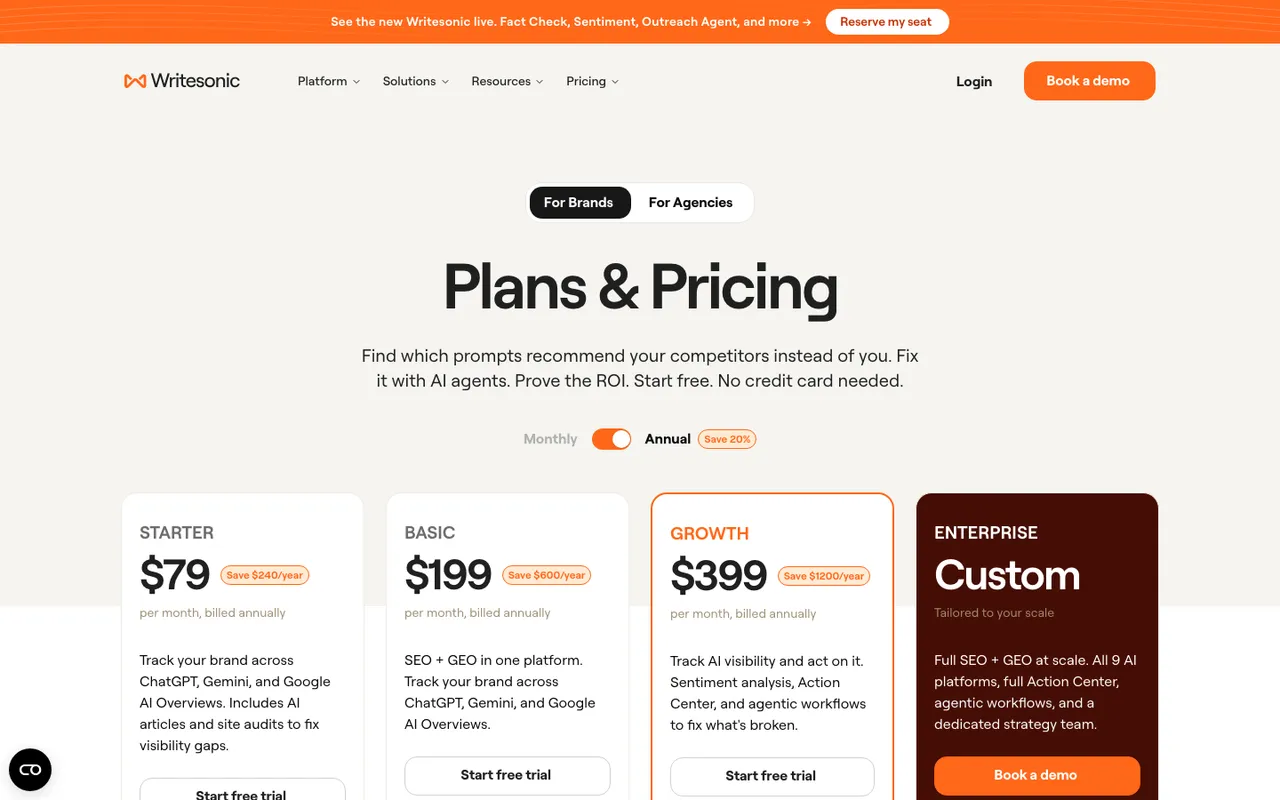 Writesonic's pricing page, captured November 6, 2026.
Writesonic GEO announces Fact Check in the banner across its pricing page, and the Enterprise card lists "Fact Check & Citation Decay," Social Citations, Page Tracker and the Outreach Agent. Sentiment analysis starts on Growth ($399 a month billed annually). Self-serve plans track ChatGPT, Gemini and Google AI Overviews and include an AI article writer, so you can publish a correction even on Starter ($79). The page doesn't explain what Fact Check compares claims against, and it is Enterprise only.
4. Goodie AI: claims checked against facts you set
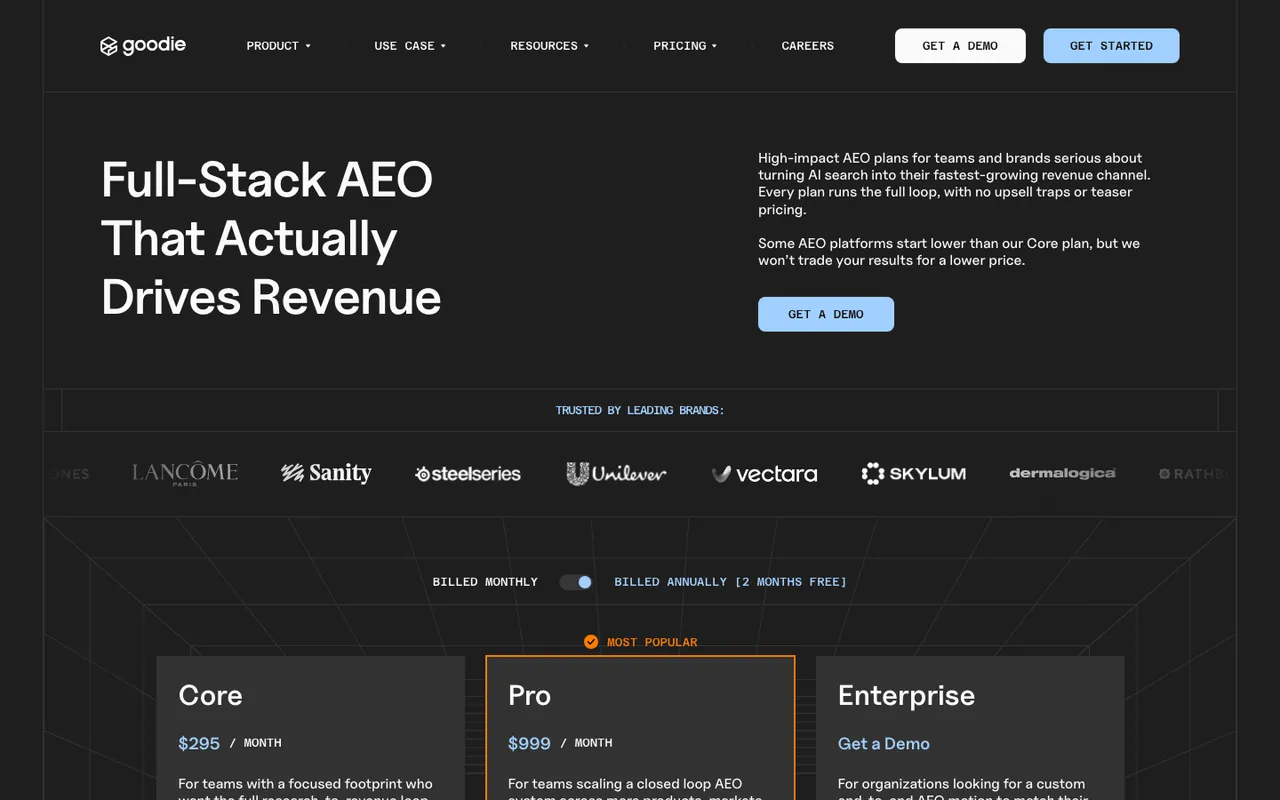 Goodie's pricing page, captured November 6, 2026.
Goodie AI's pricing page includes a section called Brand Command, described as "every claim AI makes about you, checked against the pillars and facts you set." It lists four measures: inaccuracy rate, narrative coverage, adverse citation share and recommendation rate. The reporting section promises to "catch misrepresentation," and the agents (content optimization, an outreach agent, a technical agent) cover the fix. Core is $295 a month with a 7-day free trial; Pro is $999.
Adverse citation share is a useful idea, since it points at the sources carrying the bad claim. The page doesn't say which plan includes Brand Command, though, so confirm it is on the tier you're quoted.
5. Scrunch AI: control what agents read
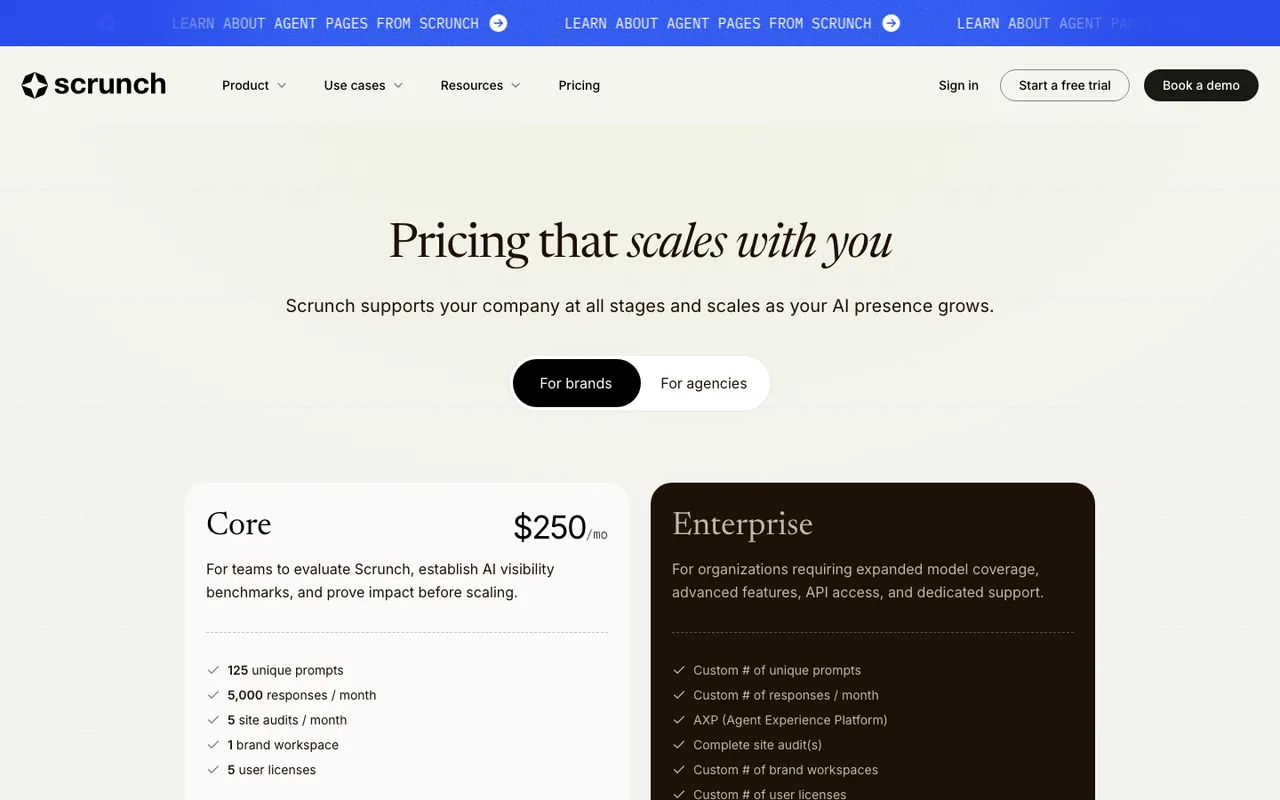 Scrunch AI's pricing page, captured November 6, 2026.
Scrunch AI takes a different route to the same problem. Its Agent Experience Platform (AXP) serves AI-optimized versions of your pages to AI agents without changing what humans see. That doesn't find wrong claims, but it gives you direct control over the version of your site that agents read, which can help when the error starts on your own pages. Core ($250 a month, 7-day free trial) includes citations and sources, sentiment, insights and recommendations, and one page optimization a month. AXP is Enterprise. We found no claim extraction or fact checking in the sources we read.
6. Profound: a named FactCheck inside an enterprise program
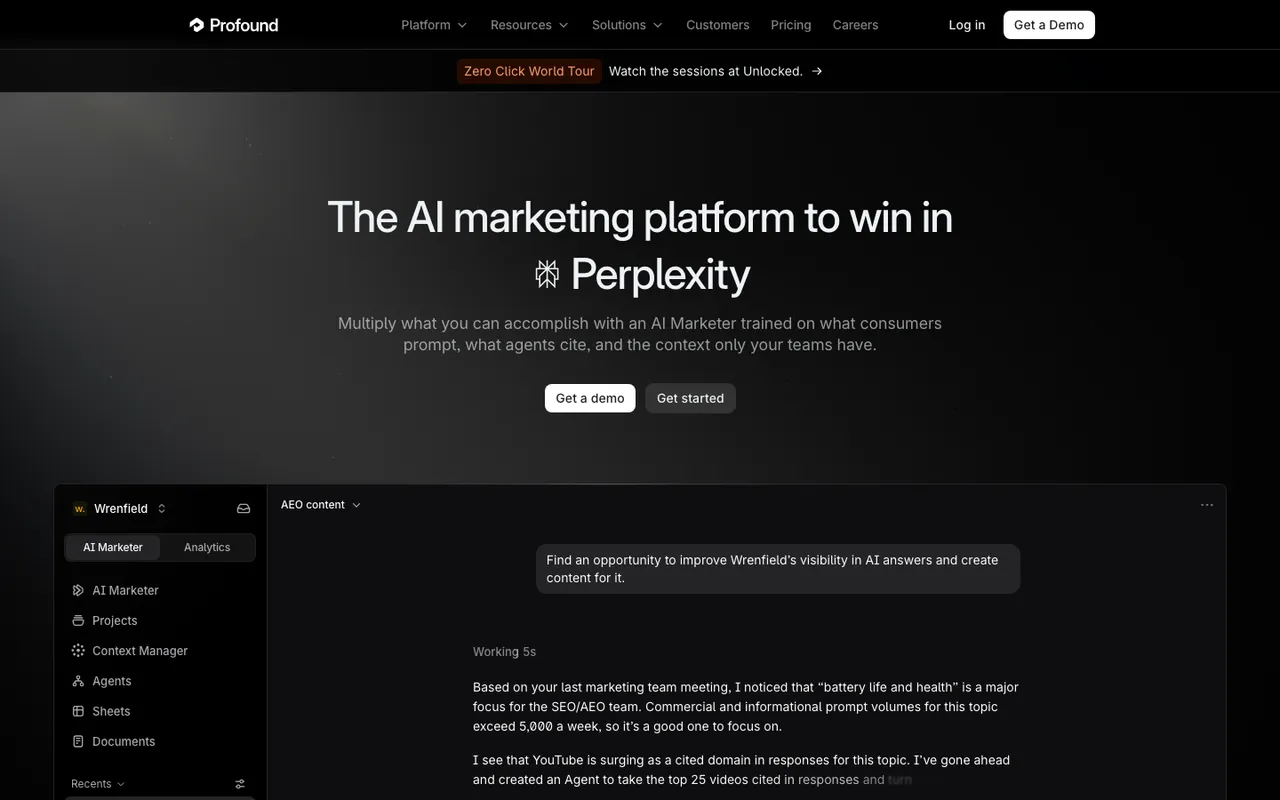 Profound's homepage, captured November 6, 2026.
Profound's homepage includes a FactCheck section: "Verify the accuracy of AI claims. Combat where AI is spreading misinformation about your brand." A sentiment section promises to show "the narrative and the sources driving it," and a Context Manager stores brand knowledge for its AI Marketer agents. The pricing page shows only a free Trial and a custom Enterprise plan, and it doesn't say which plan includes FactCheck or how the check works. Our catalog's earlier estimate for Enterprise is around $40,000 a year.
7. Brandlight: managed visibility, accuracy not documented
 Brandlight's homepage, captured November 6, 2026.
Brandlight sells a managed enterprise program. The homepage describes visibility, sentiment and share of voice against competitors, a weekly ranked action list split by team (page fixes, content briefs, publisher plays), an AEO crew of strategists, and forward-deployed engineers who work inside your stack. It also says it tracks which actions made a difference. We found no claim extraction or fact checking on the page, and prices aren't published. It suits a Fortune 500 team that wants people to do the correction work, provided accuracy checking is confirmed in the contract.
8. Evertune: statistical perception, not claim checking
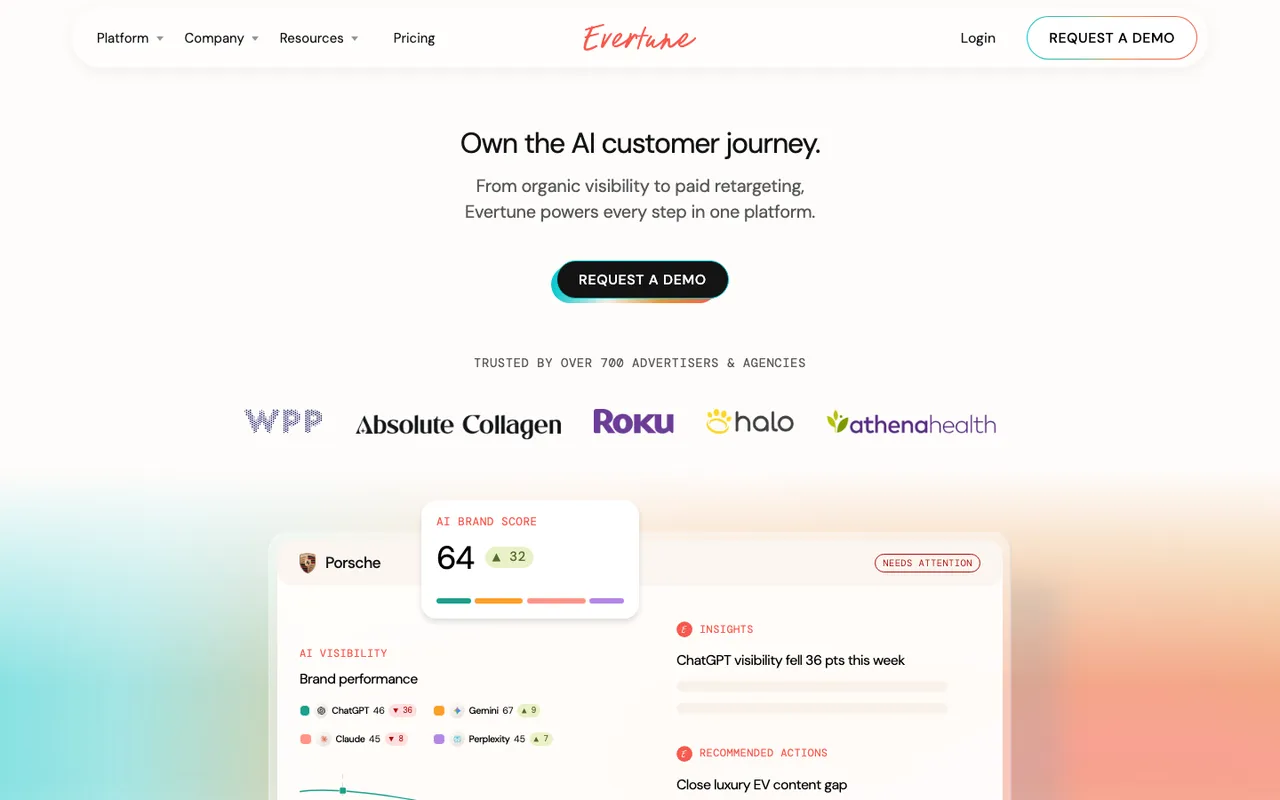 Evertune's homepage, captured November 6, 2026.
Evertune measures how AI perceives a brand with large samples. It runs each prompt up to 100 times per model across 11 models and grounds prompts in EverPanel, a panel of more than 150 million user prompts. That sample size helps answer a question the others gloss over: is a bad answer a one-off, or what the model usually says? Its agents create content, score your domain on bot access, HTML quality and extractability, and build ChatGPT ad campaigns. The homepage also announces a new Starter plan without a price. We found no claim-level fact checking.
Who should pick which
- You want to find wrong claims, prove they are wrong from your own pages, and fix them in one tool: Promptwatch Business, or Agency Scale for agencies.
- You are an enterprise buyer that wants claim review inside an action platform: AthenaHQ Enterprise.
- You already write content in Writesonic and can move to Enterprise: Writesonic GEO.
- You want claims checked against a fact list you maintain, with agents on the fix: Goodie AI, once you confirm the plan.
- The errors start on your own site and you want to control what agents read: Scrunch AI Enterprise.
- You need large-sample perception data that will survive a board meeting: Evertune.
- You want a managed team to do the work: Brandlight, with accuracy checking written into the scope.
Our recommendation
Fixing what AI says starts with knowing exactly which sentence is wrong and where it came from. Promptwatch is built for that sequence. Brand Narrative lists the claims and how often each one appears, Fact Check proves a claim right or wrong against pages crawled from your own site, citation analytics points at the source, and the accuracy score tells you whether the correction is taking hold. If outdated or wrong claims are costing you deals, start the 7-day free trial on Business, run Fact Check on the five most-repeated negative claims in Brand Narrative, and fix the pages it points to first.
FAQ
Can a GEO tool make ChatGPT stop saying something wrong?
No tool can edit a model's answer. What a tool can do is show you the wrong claim, the source the engine cites for it, and whether your corrected page has been crawled. After that, models re-read sources on their own schedule.
What is the difference between sentiment and fact checking?
Sentiment measures tone. Fact checking measures truth. A model can describe you warmly while quoting the wrong price, so a high sentiment score says nothing about accuracy. Promptwatch keeps them separate: sentiment scores tone, Brand Narrative scores claims and themes, and the Fact Check accuracy score measures how many checked claims are true.
Which tools check AI claims against my own website?
Promptwatch's Fact Check reads pages crawled from your site for statements that confirm or contradict a claim. AthenaHQ lists a Knowledge Base with claim review on Enterprise, and Goodie checks claims against facts you set. Writesonic and Profound name fact-check features without describing the method on their pages.
How often should I re-check?
Often enough to see a change after you fix a page. Daily prompt tracking will show when a claim starts to fade, but give it time: a corrected page has to be re-crawled before engines can cite the new version, so check crawler visits to that URL before you judge the fix.
What does it cost to get fact checking?
On the captured pages, Promptwatch Fact Check starts on Business at $579 a month with a 7-day free trial on monthly billing. AthenaHQ, Writesonic and Profound put their versions on custom-priced Enterprise plans. Goodie doesn't say which plan includes Brand Command.